
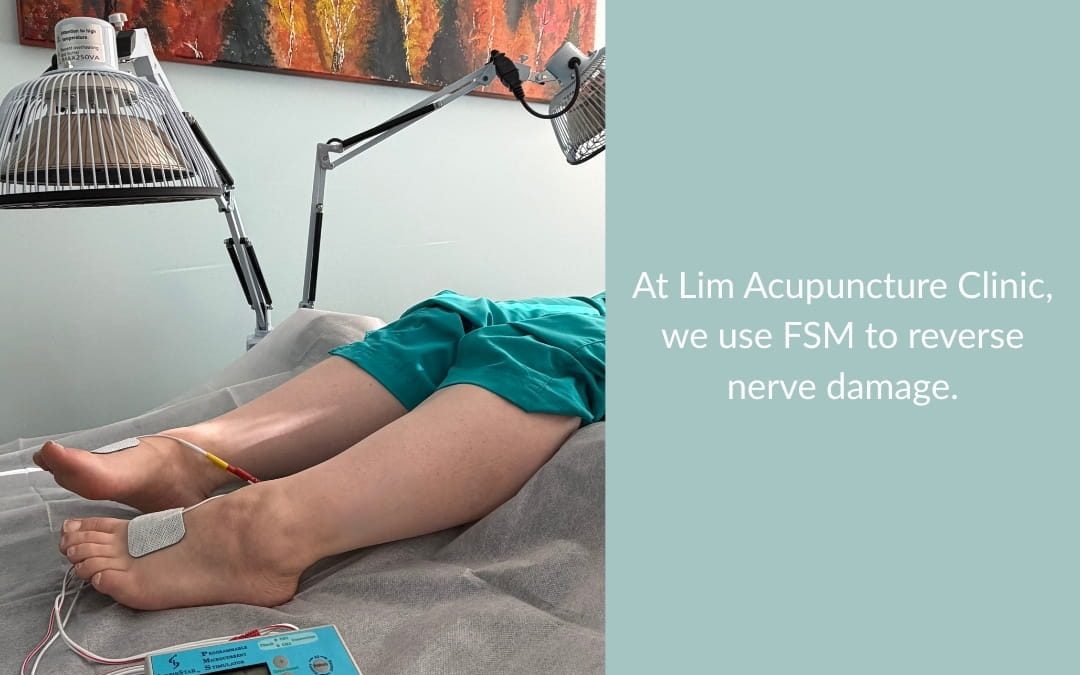
Electrical stimulation has been used in medicine since as far back as 2750 BC, when sick people were exposed to electric eels (uhm, ouch!). Thankfully, there has been significant progress and research into how electrical stimulation works and how it helps our bodies.
If we look back to the year 1812, Dr. John Birch discovered that by passing electrical current through surgically implanted needles, the body was able to heal a fracture in the bone. In the 1970s, the creation of the TENs machine helped introduce many to electrical stimulation for pain relief. But it wasn’t until the late 1990s when Dr. Carolyn McMakin developed Frequency Specific Microcurrent, a much gentler form of electrical stimulation that is slowly garnering the attention it deserves.
If you are unfamiliar with Frequency Specific Microcurrent, you wouldn’t be alone. Frequency Specific Microcurrent is used at Lim Acupuncture Clinic, often in addition to acupuncture, to support care for conditions like peripheral neuropathy and chronic shoulder pain. Many of our patients have noticed meaningful changes in their symptoms by receiving both treatments.
To understand why these two therapies pair so well, it helps to first understand what Frequency Specific Microcurrent actually is and how it works in the body.
What Is Frequency Specific Microcurrent?

At its core, Frequency Specific Microcurrent, or FSM, stems from the principles of biological resonance. That may sound complicated, but what that means is that all cells operate at a specific vibrational frequency to help maintain, organize, and power that particular area of the body. For example, cells in our lungs have a different frequency than cells in our leg muscles. When our cells are healthy and undamaged, they function at their resonant frequency, which keeps our body happy.
When these cells face trauma, like an injury, they become damaged and stop functioning at their resonant frequency. When FSM is applied, it uses two pairs of differing frequencies, one that targets the condition (like inflammation) and one that targets the tissue (like muscle). In doing this, the FSM device acts like a tuning fork, slowly tuning those cells back to their resonant frequencies. Studies completed on FSM treatments have shown that it increases the production of our cells' energy currency, Adenosine Triphosphate (ATP), by up to 500%. This provides the necessary power for the cells to repair and heal, so the extra boost FSM gives to our bodies is critical to how long it takes us to recover.
If all of that sounds a little technical, here’s the simple takeaway: Frequency Specific Microcurrent doesn’t force the body to do anything. Instead, it provides gentle signals that help the body remember how to function the way it’s meant to. Whatever frequency your body doesn’t need, it just ignores!
To read more on how Frequency Specific Microcurrent works, please visit this journal article co-written by a pioneer in the field of FSM, Dr. Carolyn McMakin.
FSM vs TENS vs Electroacupuncture: Why They Are Not the Same
Many patients have tried—or at least heard of—electrical therapies before, which can make Frequency Specific Microcurrent easy to confuse with other modalities. While these therapies all use electricity, they differ significantly in how they work and what they are designed to do. Here’s a comprehensive list of some of the key differences between FSM, TENS, and electroacupuncture:
Frequency Specific Microcurrent (FSM):
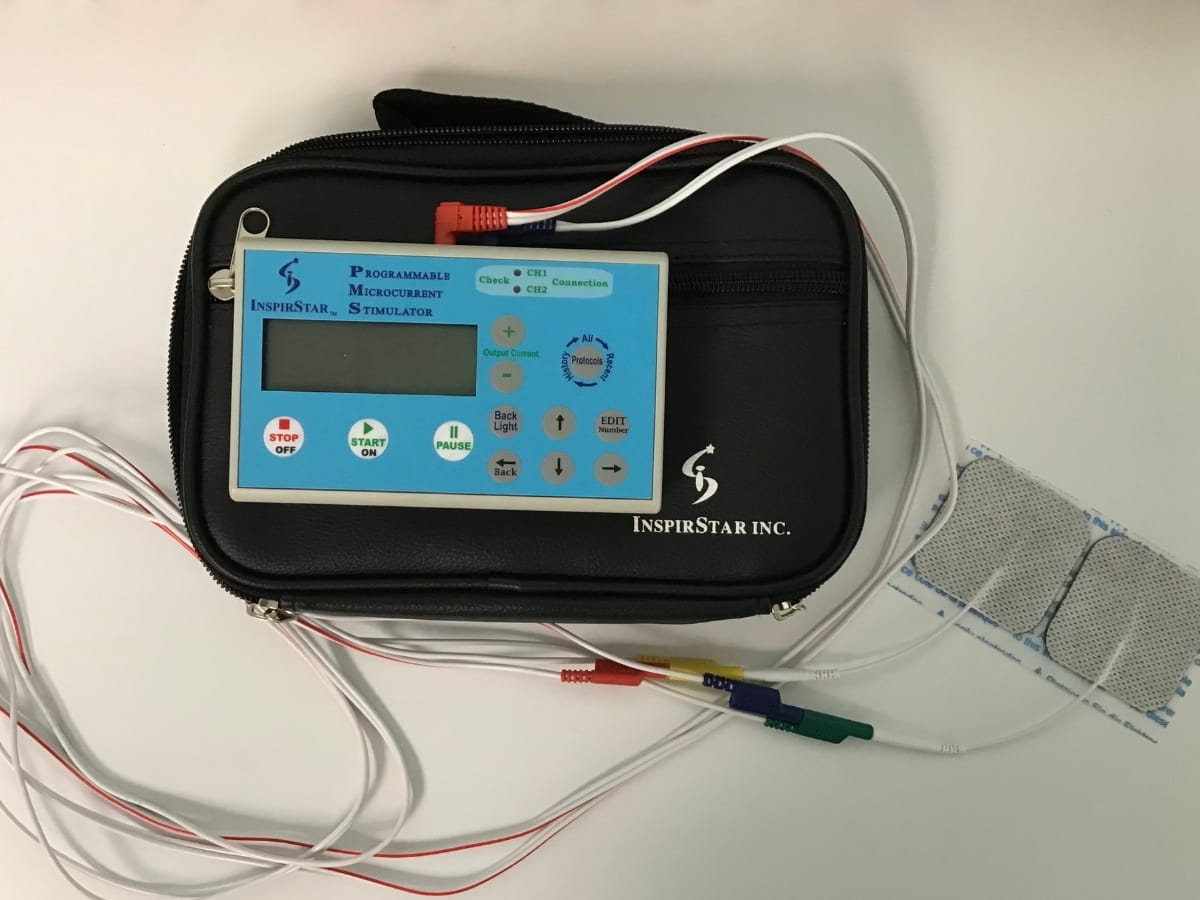
- Uses microamp-level current (low and gentle)
- Often not felt at all
- Works at the cellular and tissue level
- Uses specific frequency combinations for tissue and condition targeting (two pairs of frequencies at the same time)
- Focuses on supporting cellular communication and healing
TENS (Transcutaneous Electrical Nerve Stimulation):

- Uses milliamp-level current (much stronger than FSM)
- Creates a noticeable tingling or buzzing sensation
- Manages pain, but does not treat the underlying cause
- Often used at home for temporary pain relief
Electroacupuncture:

- Combines acupuncture needles with electrical stimulation
- Sends an electrical current into the muscles delivered through the needles
- Typically uses set frequencies to stimulate acupuncture points
- Designed to enhance traditional acupuncture effects
Safety, Skill, and Precision: Why FSM Is Practitioner-Driven

While the earliest uses of electrical stimulation may sound intimidating, modern Frequency Specific Microcurrent is quite the opposite. FSM uses an extremely low level of electrical current—similar to the natural electrical signals already present in the body—which is why many patients report feeling little to nothing during treatment.
Because FSM relies on specific frequency combinations and precise application, it is not a plug-and-play therapy. The therapy is built around selecting specific frequency combinations that correspond to both the issue involved and the condition being addressed. Proper training and clinical experience are crucial for selecting the most suitable frequencies and treatment approach for each individual.
Dr. Lim has completed advanced training in Frequency Specific Microcurrent and continues to expand her knowledge in this evolving field. She has developed her own customized FSM programs and uses other experts' programs as well in the clinic, allowing treatments to be tailored to each patient’s needs. Her training in FSM enables her to apply it thoughtfully alongside acupuncture care. Rather than using a one-size-fits-all approach, treatments are customized based on each patient’s presentation and response.
How Do FSM and Acupuncture Work Together?
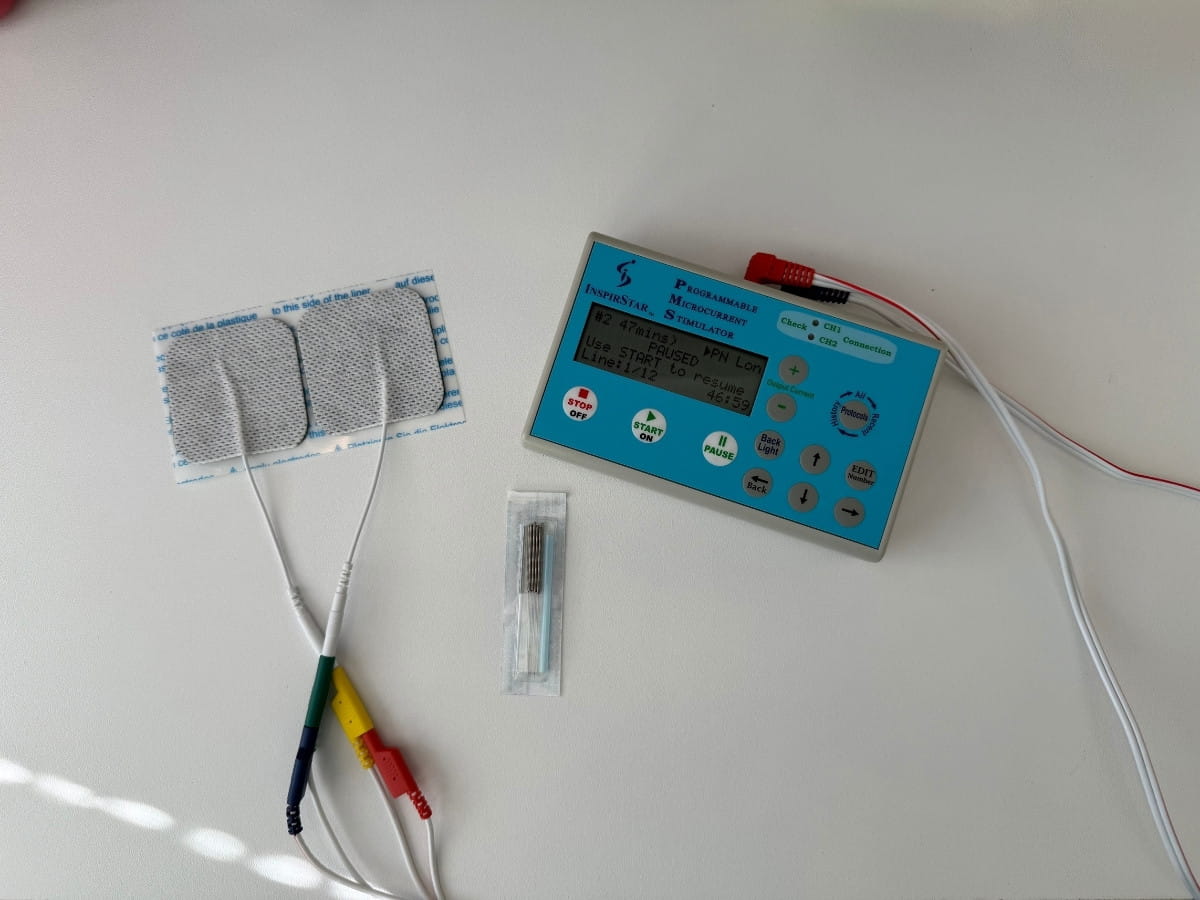
Acupuncture and FSM go together like peanut butter and jelly—they complement each other by supporting the body through different, yet overlapping, pathways.
Since FSM and acupuncture both support communication within the body, they are often used together for conditions involving pain, inflammation, nerve irritation, and tissue dysfunction. We also use FSM during our facial acupuncture sessions for anti-aging benefits, boosting circulation, and improving muscle tone. FSM specifically has had success in alleviating symptoms related to:
- Peripheral Neuropathy (read our blog "Peripheral Neuropathy" to learn what else we offer for treatment options.)
- Other Causes of Nerve Damage
- Chronic Pain
- Joint Pain
- Post-Injury/Post-Surgery Recovery
- Brain Fog/Fatigue
- Inflammation
Acupuncture works by influencing the nervous system, circulation, and the flow of energy throughout the body, while FSM focuses on gentle electrical signaling at the cellular and tissue level. When used together, these therapies can support the body’s ability to regulate, repair, and respond more efficiently than either therapy alone. As with acupuncture, responses to FSM vary from person to person, and no specific outcomes or timelines can be guaranteed.
To read a study completed about acupuncture and FSM used together to treat combat veterans, click here. To read about the effectiveness of FSM on somatic symptoms related to mental health, click here.
What to Expect During Your FSM Treatment
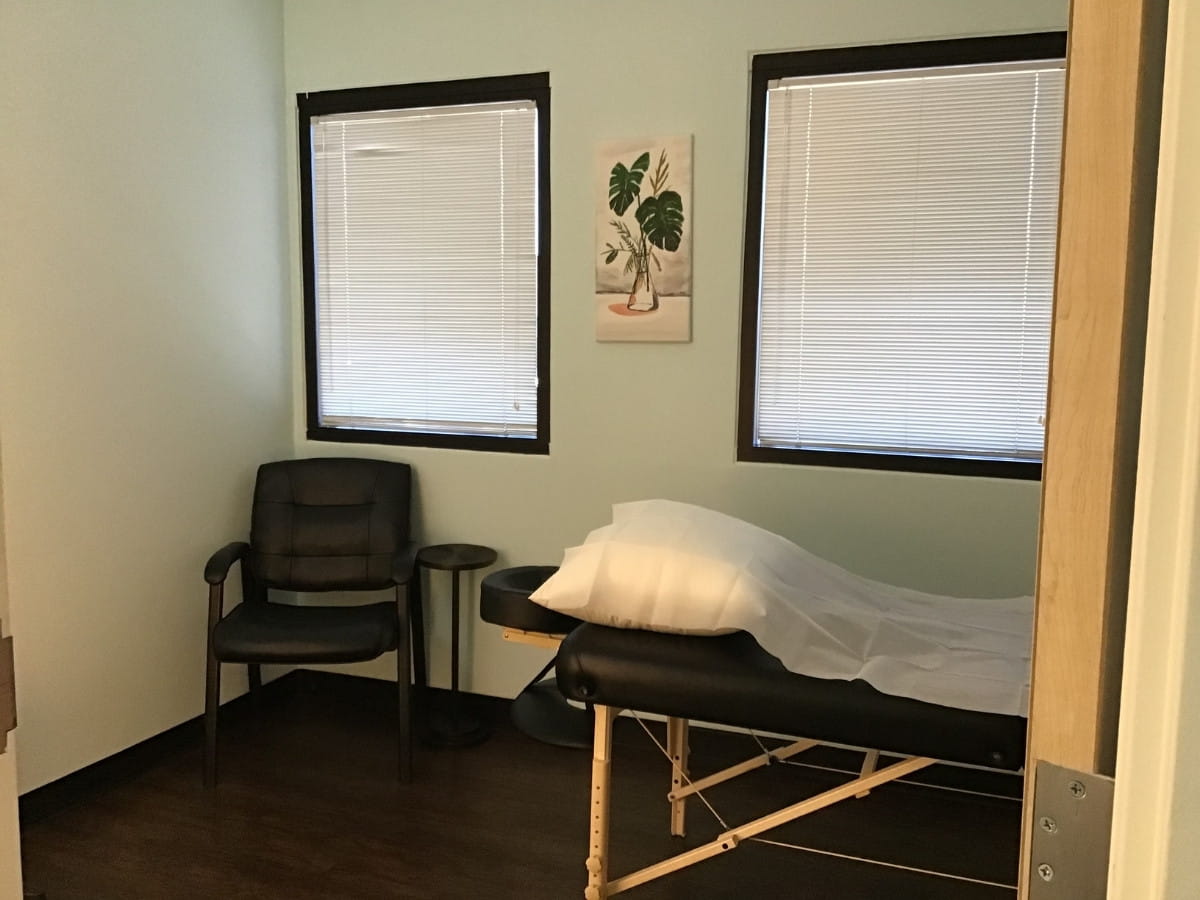
At Lim Acupuncture Clinic, in both our Centennial and Castle Rock locations, our Frequency Specific Microcurrent treatment sessions are 30-60 minutes long; however, it does vary depending on your specific treatment, but we will inform you before your session on how long you can expect your treatment to take.
Once in one of our calming, individual treatment rooms, you’ll be placed in a comfortable position that also accommodates where we place the gel stick pads that connect to our FSM devices. Once the two pads are connected and placed in the correct area and position for your treatment, you will be left to relax. Patients often report not feeling anything while their FSM treatment is going, so many doze off or even take a nap!
If you are doing FSM in addition to acupuncture, you can expect a similar experience, with the difference being that you’ll also have needles inserted by our licensed acupuncturist, Dr. Lim. The FSM device gel pads will also be placed during the time of your needle insertion. The needles will be retained for 20 minutes, and once we remove them, we will leave you to relax for the remainder of your FSM treatment.
After your treatment is complete, we will remove the gel pads from you. The removal is similar to how you take off a Band-Aid, minus the sting. Most patients leave their session feeling relaxed, and some notice subtle changes right away, while others experience benefits over time. As with acupuncture, responses to FSM can vary, which is why treatments are always individualized.
A Thoughtful, Integrative Approach to Acupuncture Care

At Lim Acupuncture Clinic, we integrate modern therapies like Frequency Specific Microcurrent with Traditional Chinese Medicine to offer thoughtful, individualized care. By combining time-tested practices with emerging technologies, we aim to support the body as gently and effectively as possible.
Choosing care isn’t just about the therapy—it’s about the approach behind it. At Lim Acupuncture Clinic, we take the time to understand each patient’s concerns and tailor care accordingly. By offering both acupuncture and Frequency Specific Microcurrent, we’re able to adapt treatment plans as your body responds, rather than relying on a single method. For patients looking for needle-free care or something more gentle that works with their body, this integrative approach offers just that.
Click Here to Book Your Consultation Online or call 720-515-9282 to speak with one of our team members.
Click Here to Meet the Team and learn more about the people who will be supporting your care.